
How Dynamic Playlists Transform Music Fan Engagement

Dynamic playlists have reshaping how we experience music by offering personalized, real-time updates based on listener preferences. Unlike static playlists, they adapt to your tastes, helping you discover new artists while keeping your favorites in rotation. Here’s why they matter:
Personalized Listening: Tailored recommendations based on your habits.
Artist Discovery: Over 50% of new artist discoveries on Spotify come from dynamic playlists.
Stronger Connections: Blends familiar tracks with new ones to build emotional bonds.
Real-Time Updates: Playlists like Spotify’s “Discover Weekly” and “Release Radar” evolve constantly to stay relevant.
Dynamic playlists are powered by algorithms that analyze your listening behavior, balancing known and new tracks to keep things fresh. For artists, they provide exposure and data insights, helping them reach the right audience. Whether you're a listener or an artist, dynamic playlists are shaping our experience.
How Dynamic Playlists Boost Fan Engagement
Personalized Listening Journeys
Dynamic playlists offer listeners a unique music experience by using smart algorithms to tailor content to individual tastes. Spotify, for instance, analyzes user activity - like what you like, skip, or share - to create custom "taste profiles." These profiles guide recommendations that feel handpicked just for you. By blending human curation with algorithm-driven suggestions, platforms ensure the music hits the right note for each listener. This approach not only keeps users happy but also helps artists connect with fresh audiences.
Discovering New Music and Artists
Dynamic playlists play a huge role in helping fans discover new music. In fact, more than half of new artist discoveries on Spotify come from these playlists. Being featured can lead to rapid growth for artists, with streaming in new countries jumping by 62% since 2019. And it doesn’t stop there - playlist exposure often translates to increased concert ticket sales through the platform. These playlists don’t just introduce fans to new music; they strengthen the fan-artist bond through thoughtfully curated tracks.
Strengthening Emotional Bonds
These playlists do more than just recommend songs - they build emotional connections. By blending familiar favorites with fresh discoveries, they adapt to listeners' evolving preferences. Features like Spotify's Canvas, which adds visuals to tracks, strive to amplify engagement. Songs paired with visuals see ~4x more saves and playlist additions. This seemingly subtle combination helps turn casual listeners into loyal fans who stick around for the long haul.
Dynamic playlists succeed in creating deeper connections by:
Offering personalized experiences that grow with the listener
Adjusting recommendations to fit different moods or settings
Striking a balance between new discoveries and beloved tracks
Some playlists have even driven artist discovery rates up by over 3,000%, proving how effective they are at building lasting relationships between artists and their audiences.
Strategies for Implementing Dynamic Playlists
Using Algorithms and Data
Streaming platforms rely on advanced algorithms to deliver a personalized music experience. Spotify, for example, uses a mix of collaborative filtering, natural language processing (NLP), and raw audio analysis to predict user preferences and recommend tracks. By analyzing song characteristics, raw audio modeling helps match listeners with music that aligns with their tastes. I could dive much deeper into this, but I’ll save it for another post.
Balancing Known and New Tracks
A well-crafted dynamic playlist strikes the right balance between familiar and fresh content. Here's how this distribution can look:
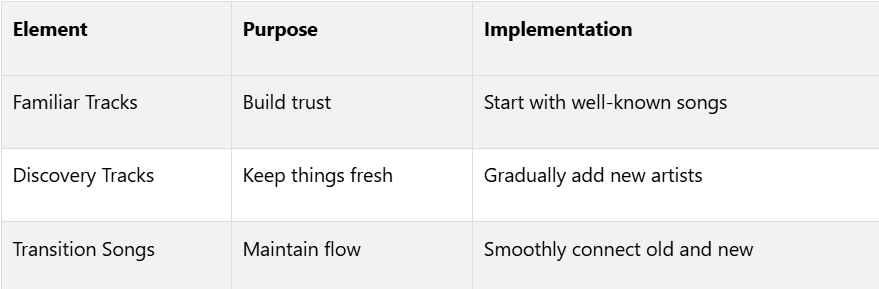
Spotify's Discover Weekly is a great example of this approach, while Release Radar has proven to generate more streams than any of Spotify's other curated playlists.
Real-Time Playlist Updates
To keep playlists relevant, real-time updates are essential and hyper-personalized playlists reflect users' unique tastes. This is achieved through:
Tracking user behavior like skips and replays to gauge engagement.
Refreshing content regularly based on trends and listener activity.
Fine-tuning algorithms to improve recommendations as users interact with the platform.
Spotify's daylist, introduced in 2023, updates multiple times a day to align with users' changing moods and preferences, ensuring playlists stay fresh and engaging.
Platforms also measure success through metrics like playlist followers, song shares, and listener feedback. These strategies ensure playlists remain relevant and continue to resonate with audiences.
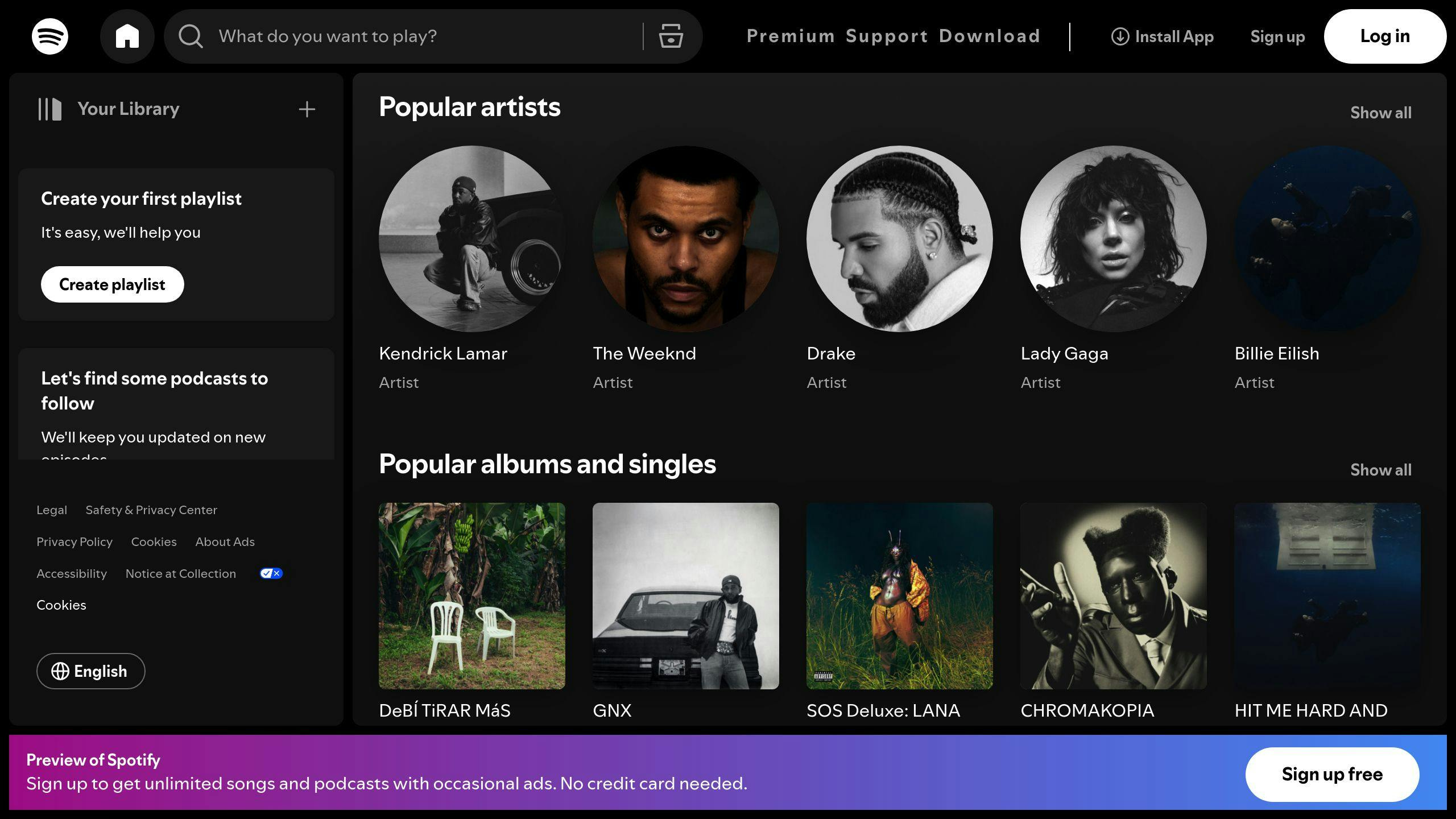
How Spotify's AI-Driven Recommendations Work
Evaluating the Impact of Dynamic Playlists
After rolling out dynamic playlists, it's important to assess their performance to ensure they're engaging fans effectively.
Monitoring Key Metrics
To gauge the success of dynamic playlists, focus on metrics like listening time, skip rate, and playlist shares. These numbers reveal how well the playlists connect with listeners.
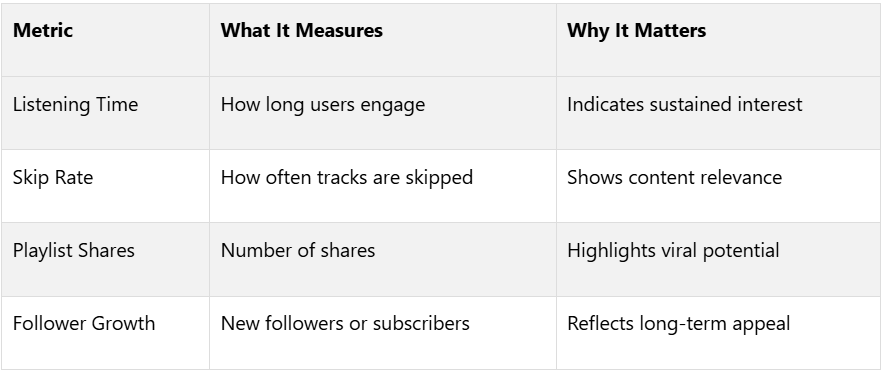
Once you've identified these metrics, dig deeper to uncover insights that can help fine-tune your playlists.
Analyzing Playlist Data
Platforms like Spotify for Artists and SymphonyOS offer detailed analytics on play counts, audience demographics, and engagement trends. These tools empower artists and labels to tweak playlists based on real-world data.
Not only do these tools help refine playlists, but they also spotlight examples of successful, data-backed curation.
Examples of Successful Playlists
Spotify's Discover Weekly and Release Radar are great examples of dynamic playlists done right. They combine frequent updates, well-balanced content, and social features to keep listeners engaged and help them discover new music [1].
"Artists can use tools like SymphonyOS to create playlists that are tailored to their audience, increasing the likelihood of engagement and music discovery" [2].
Effective dynamic playlists rely on regular updates, thoughtful content selection, and community-driven features. By continuously analyzing and tweaking playlists, creators can maximize their impact and keep fans coming back.
Guidelines for Artists and Labels
Artists and labels can make the most of dynamic playlists by focusing on three main areas: fine-tuning metadata, building relationships with platforms, and weaving playlists into their marketing efforts.
Improving Metadata for Playlist Inclusion
Metadata like track titles, genre tags, and release details plays a huge role in getting noticed and included in playlists.
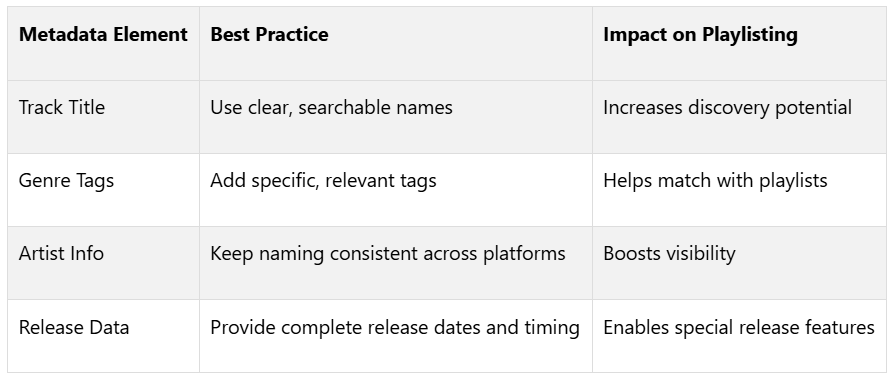
Organized and accurate metadata ensures your music is categorized correctly, increasing the likelihood of landing on playlists [2].
Once your metadata is in order, the next step is to work closely with streaming platforms to maximize your reach.
Working with Streaming Platforms
Building strong ties with streaming platforms can greatly improve visibility. Features like Spotify's "Canvas" and Apple Music's "Up Next" program offer unique ways to stand out [1].
Here’s how to make the most of these platforms:
Stay active on tools like Spotify for Artists to manage your presence.
Submit unreleased tracks for editorial playlist consideration.
Monitor real-time performance data to adjust your strategy.
Use platform features that can influence algorithms, like artist bios and visuals.
Integrating Playlists in Marketing
Platforms like SoundCampaign connect artists with over 1,000 verified playlist curators managing 11,000+ playlists across 1,200 genres [2]. This creates opportunities to incorporate playlists into your marketing plan.
Some ways to do this include:
Running pre-save campaigns to build excitement before a release.
Using social media to encourage audience interaction with your playlists.
Partnering with other artists for cross-promotion.
Leveraging platform analytics to track and improve your efforts.
Focus on creating genuine connections with your audience rather than just chasing numbers.
Conclusion: The Role of Dynamic Playlists in Fan Engagement
Dynamic playlists have reshaped how fans discover music and interact with their favorite artists in the streaming era. By using data-driven personalization, these playlists create tailored experiences that resonate with individual listeners while giving artists a chance to connect with new audiences.
The mix of advanced algorithms and human curation ensures highly customized and engaging playlists. This blend opens doors for both established and up-and-coming artists to build stronger relationships with their listeners.
Here’s how dynamic playlists influence fan engagement:
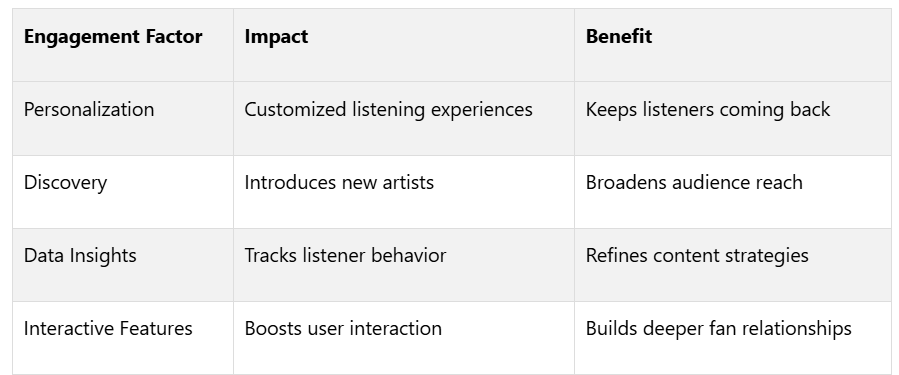
For artists and labels, staying ahead means embracing these tools while continuing to connect with fans on a personal level. As AI and data analytics advance, dynamic playlists will keep evolving, offering fresh ways to discover music and strengthen listener engagement.
Dynamic playlists have changed how people experience music. They’re not just a feature - they’re shaping the future of streaming by bridging the gap between artists and fans in new and exciting ways.
Hey Phil, this was an awesome read. I love how you mentioned the importance of mixing old tracks and new ones for playlists. I have Spotify and it’s helped me find so many cool new artists I wouldn’t have found without going on a playlist and giving it a shot. Spotify is definitely the best platform if you want to find new music. I also love the wrapped videos it does at the end of the year to showcase your tastes. Way better than Apple Music lol.💪
The idea of dynamic playlists is such an exciting evolution in music curation! It’s fascinating to think about how playlists can now adapt to our moods and needs in real-time. This brings a whole new layer of personalization to music listening!